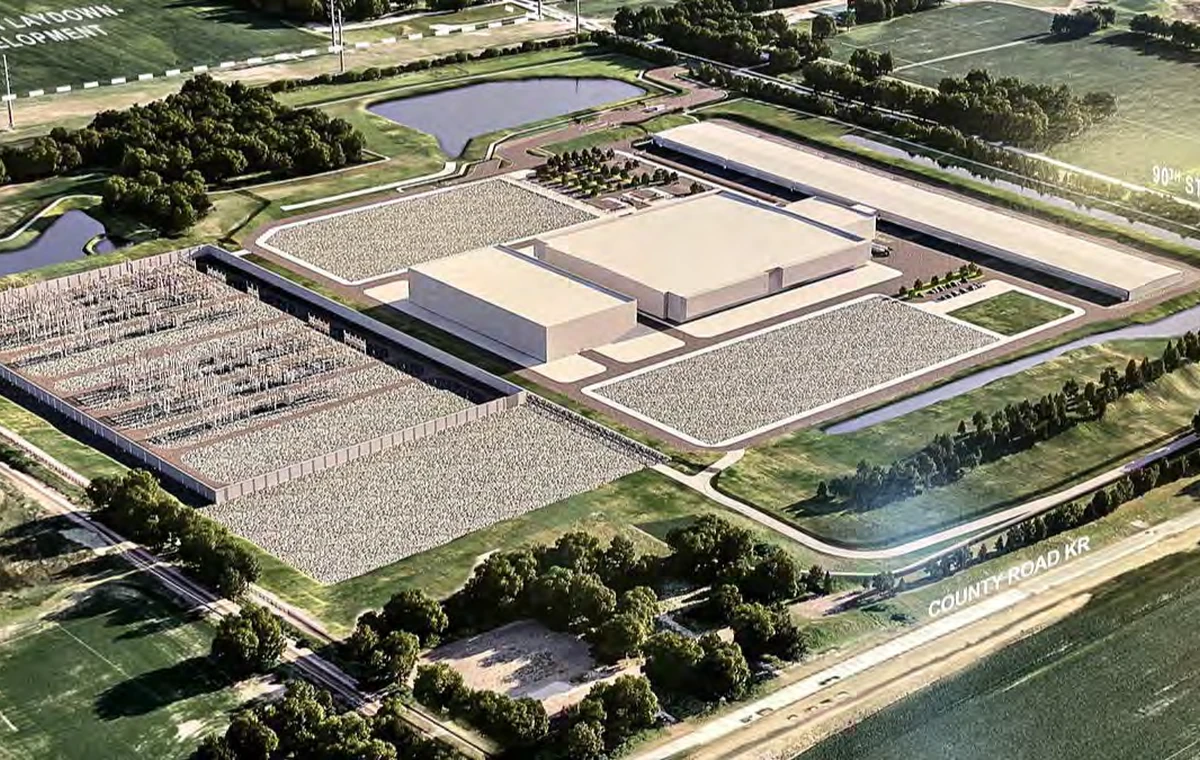
On a hyperscale-class campus, the largest schedule exposures are rarely structural. They sit in the electrical and mechanical equipment, because a defect found after a unit lands on site costs far more than one found before it ships.
On a hyperscale data center campus, the biggest schedule risk often arrives on a truck. Decima’s quality assurance (QA) team brought equipment inspection and testing into the construction management process early, moving it upstream to an off-site logistics facility so manufacturers fixed defects before anything reached the site.
Key Results
Project Snapshot
The construction management challenge: long-lead equipment on the critical path
On a campus this size, schedule risk sits in the electrical and mechanical equipment. For the construction management team, a defect found after equipment lands on site costs far more than one found before it ships.
Long-lead equipment can take 18 to 24 months to arrive. Once switchgear, generators, transformers or air handlers are delivered and set, a nonconformance means rework in place, a manufacturer return visit or a replacement unit, all on the critical path the construction schedule depends on.
The question for this project was how to move the discovery of equipment defects upstream of the site, without adding a new gate that slows deliveries or disrupts construction sequencing.
Early engagement: building quality into the construction management plan
Decima’s QA team joined during early design, so quality requirements were written into the project before equipment was bought, not added afterward.
Through design and preconstruction, the team developed the site quality plan and set up the inspection and testing program as part of the project’s construction management framework. A plan built at this stage defines who is responsible for what, which inspections and tests apply to each system, where hold points sit, how nonconformances are reported and closed, and how records are kept.
Because the plan existed before the first deliveries, off-site testing started as a planned part of the program, with manufacturers, the construction team and the wider project team already aligned on what would be checked.
Off-site equipment testing at a logistics facility
Equipment was delivered to an off-site logistics facility, inspected and put through electrical and mechanical tests. Anything that failed was assigned to the manufacturer to correct at the facility and then retested.
Only equipment that passed shipped to site. That moved problem discovery off the critical path: the site received equipment that had already been checked.
Results: defects fixed where they cost least
Because the same QA team carried the quality plan from early design into the logistics facility, equipment defects surfaced where they were cheapest to fix, with the manufacturer still engaged and the site schedule not yet exposed.
Inspection & Testing Summary
| Metric | Result |
|---|---|
| Equipment units tested | 620+ |
| Issues found at the off-site facility | 1,740+ |
| Issues corrected by manufacturers before shipment | 1,650+ |
| On-site schedule days protected (estimated) | 80+ |
| Costs avoided (estimated) | USD 13M+ |
Electrical and mechanical equipment arrived on site already inspected and tested against the project’s requirements. That reduced the chance of a defect surfacing during installation or commissioning and putting the schedule at risk.
On a hyperscale data center campus, the biggest schedule risk often arrives on a truck.
Steven Wright, Senior Director – Construction, Quality & Commissioning
Why off-site QA matters for data center owners
For owners of mission critical facilities, the largest schedule exposures are often equipment-related. A QA program that starts in design and extends to the point of integration and staging finds defects earlier, while the manufacturer’s factory and the owner’s contractual leverage are still in play.
This project shows five repeatable benefits:
Repeatable Benefits
- Earlier visibility. Quality requirements were written into the site quality plan before procurement and construction, so expectations were clear to suppliers and installers from the start.
- Leverage with manufacturers. Issues were raised and corrected while equipment was still in the manufacturer’s or logistics facility’s custody, rather than negotiated after delivery.
- Fewer surprises at commissioning. Equipment arrived with a documented inspection and test history, supporting smoother Level 3 to Level 5 commissioning.
- Schedule confidence. Finding and fixing defects off site protects the critical path and gives the owner a more reliable path to delivering capacity to tenants.
- One continuous record. The same QA team carried requirements from design through preconstruction and into testing, so nothing was lost between phases.
The approach is repeatable on other campuses, particularly where several buildings share the same equipment types and a central staging facility can test them in volume.
Frequently asked questions
What is off-site equipment testing for data centers?
When should quality assurance start on a data center project?
How does off-site QA support commissioning?